
আরও দেখুন


 08.05.2026 12:51 AM
In this review, we will analyze historical data and make important conclusions about the future dynamics of the US dollar. The conflict in the Middle East began on February 28 when the EUR/USD exchange rate was at 1.1800. In fact, the market started preparing for the war in the Middle East about two weeks before March, when the European currency traded at 1.1880 against the dollar. Therefore, I suggest we consider the 19 figure as a starting point. Two full months have passed, and on Thursday, the EUR/USD is not far from the 18 figure, just 100 basis points below its pre-war value. What does this indicate?
First of all, it shows that the US currency has not gained any significant dividends from the war in the Middle East after a substantial period. Recall that the US dollar remains the "world reserve currency," a "safe haven," a "reliable asset." These flattering epithets practically mean the following: when a new financial crisis, war, natural disasters, or other large-scale events erupt globally, investors from the "war zones" tend to flee. Naturally, they seek to preserve their capital. For this, they need to convert their local currencies and assets into those of countries unaffected by local turmoil. There are plenty of stable currencies, but why choose when there's the trusty old dollar?
Thus, when the war in the Middle East began, investors began fleeing risk and the Middle East itself. Naturally, demand for the US currency increased. However, after two months, we can confidently say that the geopolitical factor has been fully priced in by the market. The initial shock has passed; the world is beginning to adjust to oil prices above $100 per barrel, and is now expecting a truce and the unblocking of the Strait of Hormuz. Therefore, on one hand, the market expects a truce, which would automatically mean a return of capital to war-affected countries, while on the other hand, investors no longer need the safe dollar without a ceasefire.
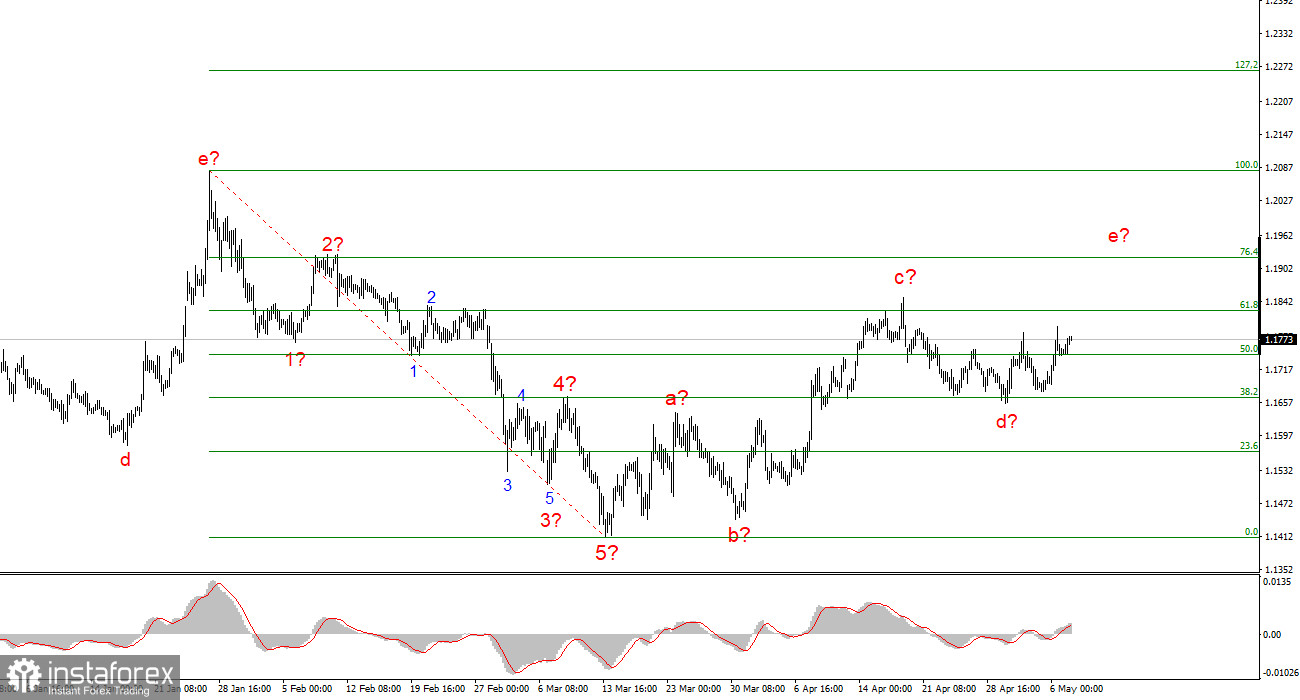
The safe dollar only held appeal against the backdrop of geopolitical events surrounding Iran. When this factor was fully priced in, market participants began to reconsider the situation surrounding the dollar itself — Trump's policies, the weakness of the US labor market, the potential for a recession in the US economy in 2026-2027, and the arrival of "dove" Kevin Warsh as the head of the Fed. Few believe that Trump will stop at his current achievements and won't reintroduce tariffs or conduct another military intervention in Greenland or Latin America. Therefore, demand for the US currency has been declining for a month and will continue to do so.
Based on the analysis of EUR/USD, I conclude that the instrument remains within the upward segment of the trend (as shown in the lower image), and in the short term, is in a corrective structure. The corrective wave set looks quite complete and may take on a more complex, elongated form only if the geopolitical background in the Middle East does not worsen. Otherwise, a new downward segment of the trend may begin from the current positions. We have seen a corrective wave, and I expect a new upward movement from current levels with targets around the 19 figure.
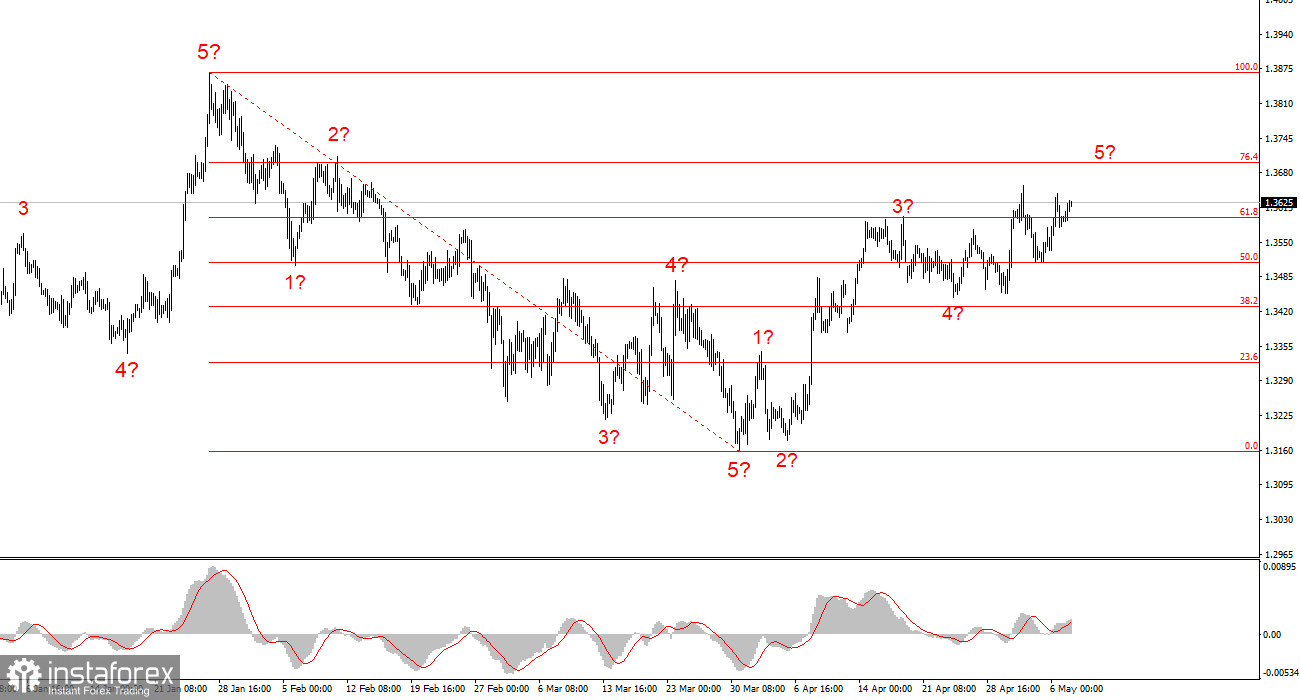
The wave picture of the GBP/USD instrument has become clearer over time, as I anticipated. Now we see a clear five-wave upward structure on the charts that may complete soon. If this is indeed the case, we should expect the formation of a corrective wave set. Therefore, the basic scenario for the coming days is an increase towards the 37 figure. What happens next will depend on geopolitical factors. Following an impulsive downward structure, we have seen an impulsive upward movement, suggesting the instrument may be at the very beginning of an upward segment of a larger trend.


