
আরও দেখুন


 22.07.2026 12:59 AM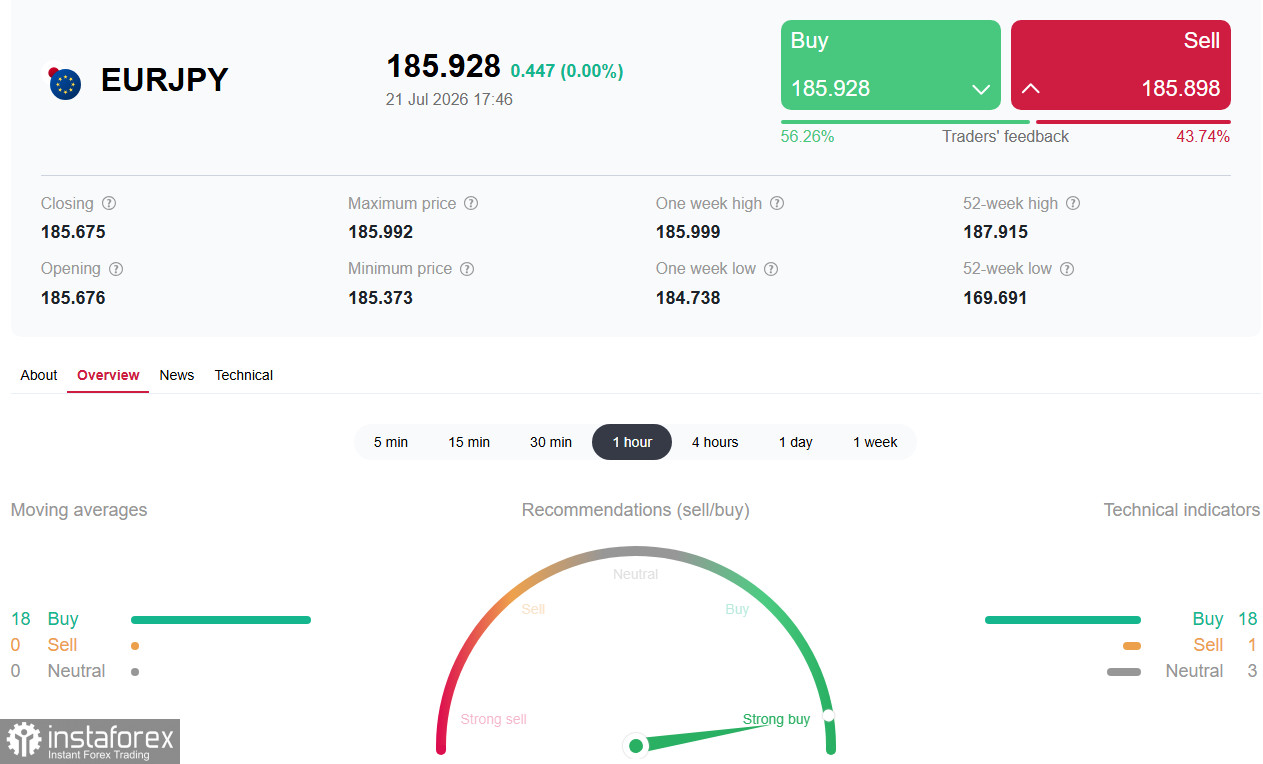
After a volatile week, the EUR/JPY pair is recovering some losses on Tuesday following a three-day decline, consolidating near the 186.00 mark during the first half of the American trading session.
The cross rate finds itself at the intersection of several powerful forces: on one side, the wide interest rate differential between the Eurozone and Japan continues to support carry trade operations, putting pressure on the yen; on the other side, escalating geopolitical tensions in the Middle East and the associated rise in oil prices are reviving inflationary concerns, increasing demand for safe-haven assets and limiting the growth potential of the pair.
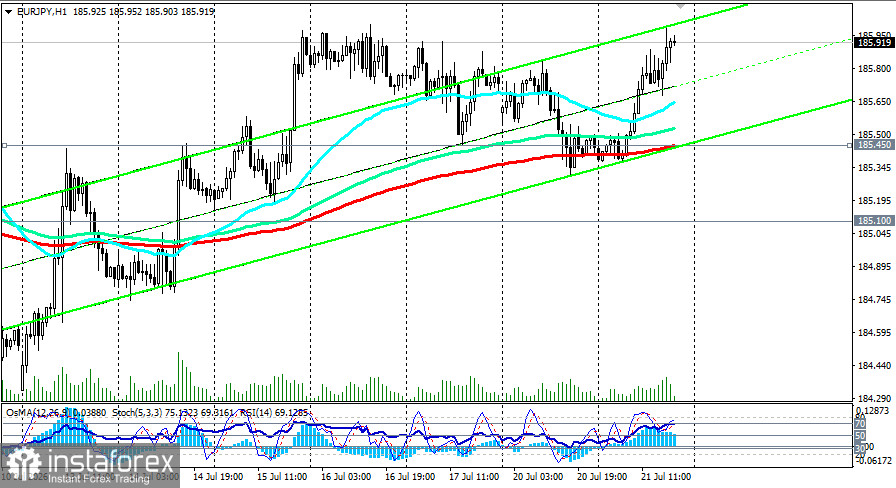
The pair holds above the 185.45 mark (200 EMA on the 1-hour chart) and the 50-day EMA (185.10), which supports a bullish sentiment among buyers. However, the pair's growth is constrained by ongoing concerns about potential currency intervention by Japanese authorities, who remain vigilant due to the weakening yen.
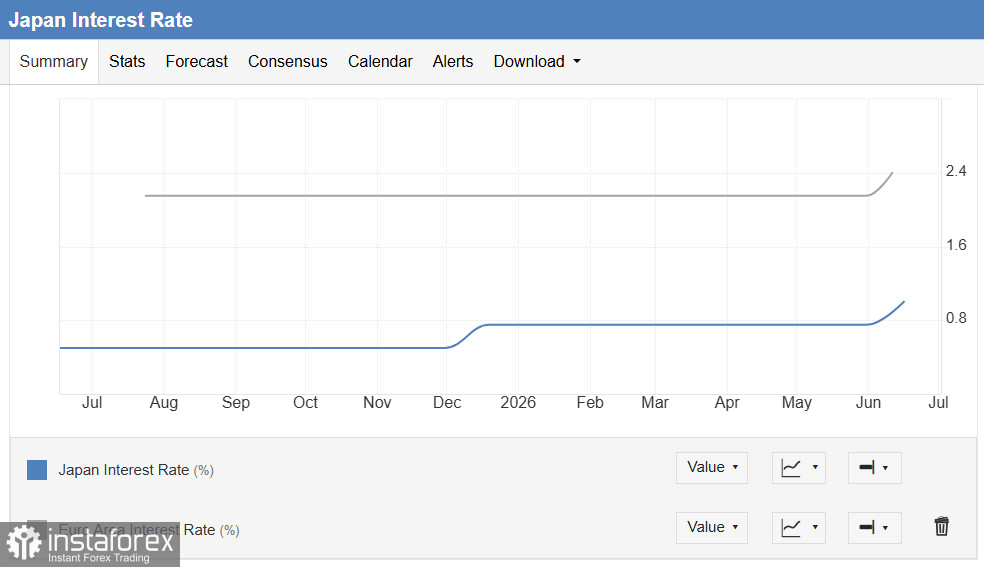
The interest rate differential continues to pressure the yen. A key factor determining the dynamics of EUR/JPY remains the persistent gap between interest rates in the Eurozone and Japan. The European Central Bank maintains the deposit rate at 2.25%, while the Bank of Japan keeps the short-term rate at 1.00% (the highest since 1995). This creates a spread of approximately 125 basis points, which continues to stimulate carry trade operations, where investors borrow the low-yielding yen to purchase higher-yielding assets, including euros.
Risk of Intervention Limits Growth. Despite the attractiveness of carry trade, market participants remain cautious regarding possible intervention by Japanese authorities. The Ministry of Finance of Japan has repeatedly stated its readiness to take measures in case of excessive fluctuations in the yen's exchange rate. These concerns limit the appetite for aggressive yen selling and constrain the growth potential of EUR/JPY.
Geopolitical Factor. The escalation of the conflict between the US and Iran, along with threats to close strategic straits, continues to push oil prices upward, reviving inflation expectations and increasing demand for safe assets. This creates a headwind for the pair, as increased geopolitical tension may bolster support for the yen as a safe-haven currency, although it does not completely outweigh the effect of the interest rate differential.
| Date | Event | Forecast/Expectation | Expected Impact on EUR/JPY |
|---|---|---|---|
July 23 | ECB Meeting | Expected to maintain the rate at 2.25% | "Hawkish" signal = increase; "Dovish" = pressure |
July 23 | Inflation Data from Japan (CPI) for June | Forecast: acceleration to 1.6% | Inflation rise = support for JPY |
July 24 | Preliminary PMI in the Eurozone and Japan | — | Influences expectations on economic growth and central bank policies |
During the week | Geopolitical developments | — | Escalation = pressure; de-escalation = support |
The EUR/JPY pair is in a decisive phase where the bullish momentum from the interest rate differential and carry trade is facing bearish pressure from intervention risks and geopolitical uncertainty. The key level of 186.20 remains the main dividing line for short-term dynamics. This week, market attention will be focused on the ECB meeting on Thursday and inflation data from Japan, which may provide new signals for further movement.
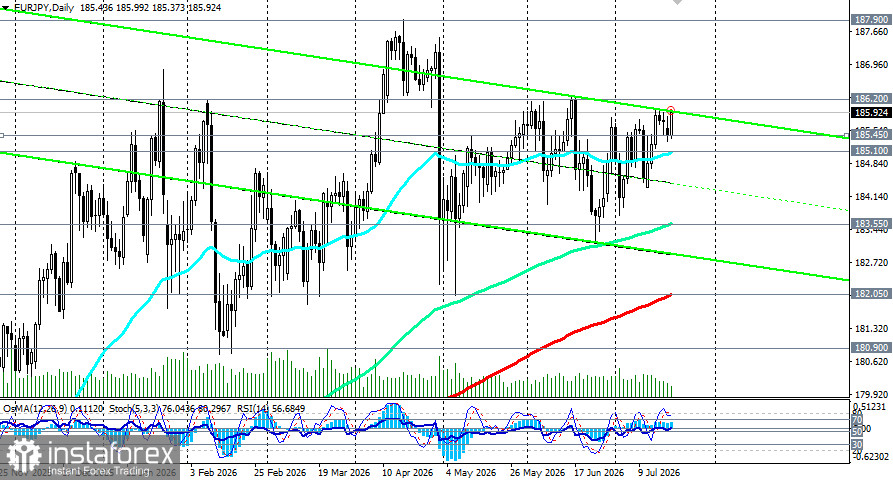
For Short-Term Traders: Prioritize long positions on a breakout at 186.20, targeting 188.00–190.00. Consider short positions only upon a breakout at 185.00 with confirmation from fundamental factors.
For Medium-Term Investors: Adopt a wait-and-see position until the geopolitical situation clarifies, and the results of the ECB meeting are known. A correction to 184.50–185.00 may be used to enter long positions, provided the interest rate differential remains wide and there are no aggressive signals regarding intervention.
Risk Management: Exercise caution due to high volatility associated with geopolitical events and central bank decisions. Strictly adhere to stop-losses and monitor developments in the Middle East as well as comments from representatives of the ECB and the BoJ.


