
See also


 09.02.2026 02:01 PM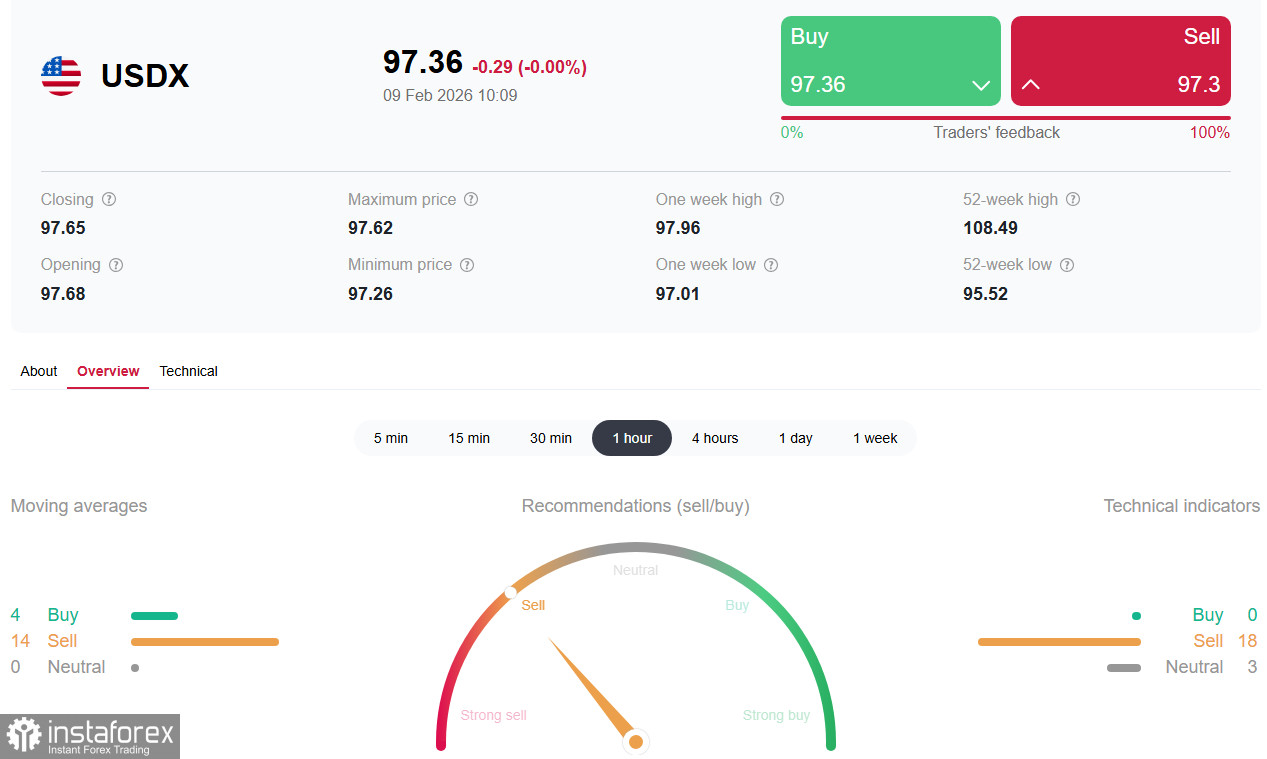
*) see also: InstaTrade Trading Indicators for USDX
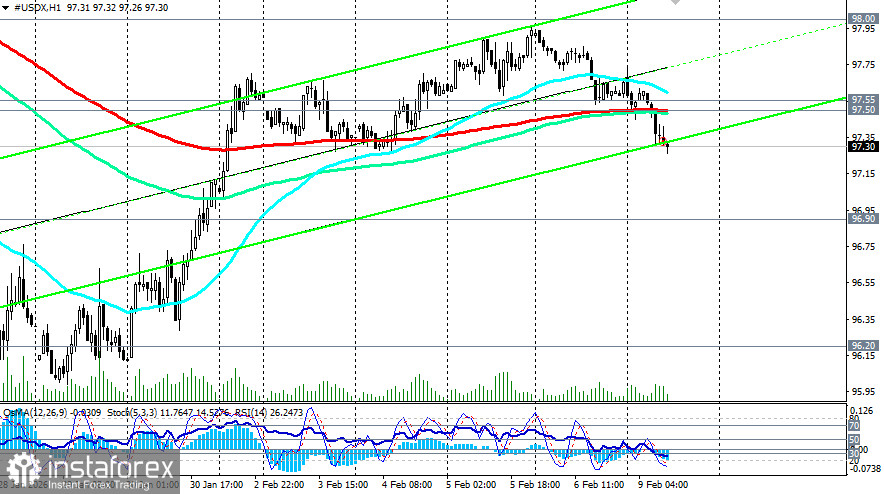
The US dollar opens the week under negative investor sentiment. The US dollar index (USDX) likewise begins the week in a defensive posture, trading around 97.30–97.50 in the first half of the European session and remaining well below key medium- and long-term moving averages. The current dynamics reflect a fundamental shift in market perception: the dollar faces an unprecedented combination of political, monetary, and structural challenges that call its multi-decade dominance into question.
Markets are increasingly pricing in a Fed easing cycle in 2026. The CME FedWatch Tool points to a high probability that the central bank will hold interest rates in March but begin easing in June, with possible continuation in September. This view is supported by recent data showing signs of a cooling labor market (for example, ADP) and a broader need to support the economy. Rate cuts are traditionally negative for the currency.
The strongest negative shock has been statements from the Trump administration that directly threaten central bank independence. The ultimatum to Fed chair nominee Kevin Warsh, including threats of prosecution if he refuses to cut interest rates, along with the Treasury secretary's comments about a possible criminal probe, constitute unprecedented political pressure. Such actions undermine investor confidence in the institutional stability of the United States and in the dollar as an asset shielded from political interference.
A broader, longer-term trend — gradual de-dollarisation of the global financial system — continues to exert background pressure. Countries and institutions are diversifying reserves and settlement currencies, reducing structural demand for the dollar, which has enjoyed undisputed reserve status for decades.
Due to the partial US government shutdown, publication of key data has been postponed. Markets are now watching for:
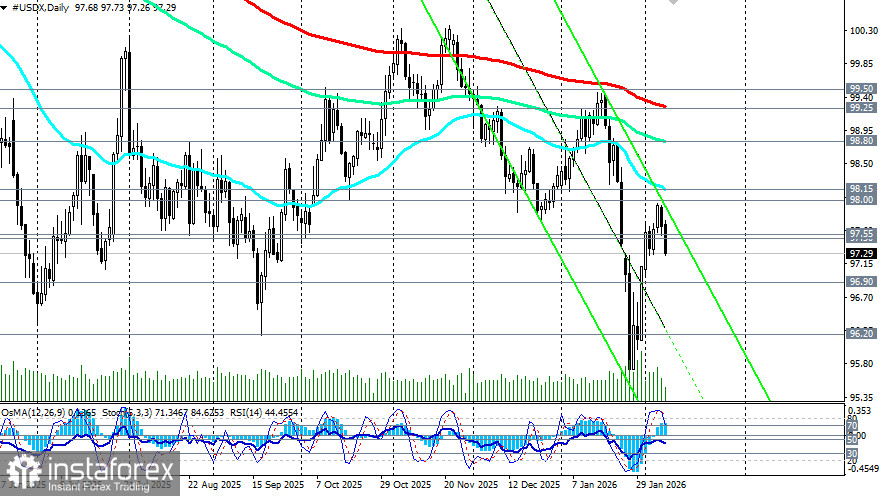
Technical indicators (OsMA, RSI, Stochastic) on short-term timeframes have turned to the sellers' side, while remaining in that stance on the weekly timeframe.
Resistance: 97.50 (former support, now resistance), 97.55 (EMA144 on the monthly chart), 99.25 (EMA200 on the daily chart).
Support: 96.90 (EMA200 on the monthly chart) — strategic level; further zone 96.20–96.00
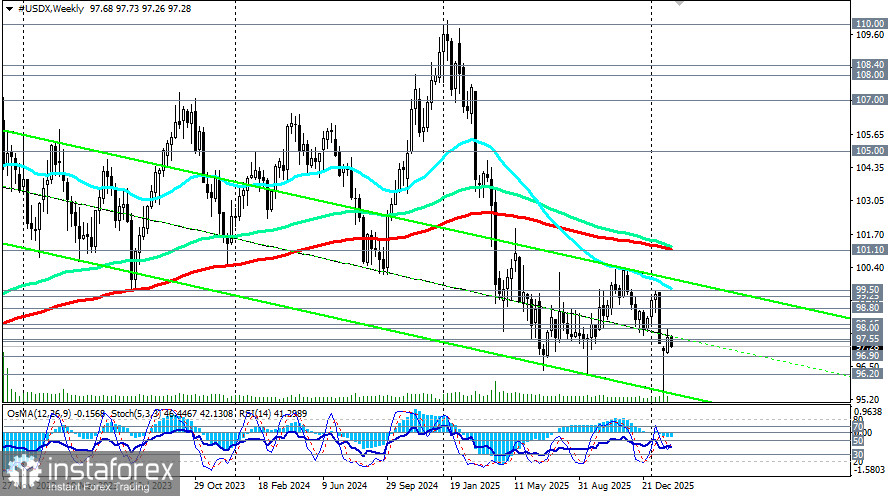
Base (bearish). If weak employment and inflation data is confirmed, and the White House's aggressive rhetoric toward the Fed persists, USDX will likely test and break the 96.90 mark. That would open the path to 96.20–96.00 and put the index firmly into a global bearish trend.
Correction (sideways/bounce). If data is strong (especially on inflation) and calming comments come from Fed officials (Waller, Bostic), a technical bounce to 97.55–98.00 is possible. However, a trend reversal would require a break above 99.25, which looks unlikely under current conditions.
Escalation (accelerated decline). An escalation of political pressure on the Fed or a sharp acceleration of de-dollarisation could trigger a steeper drop below 96.00.
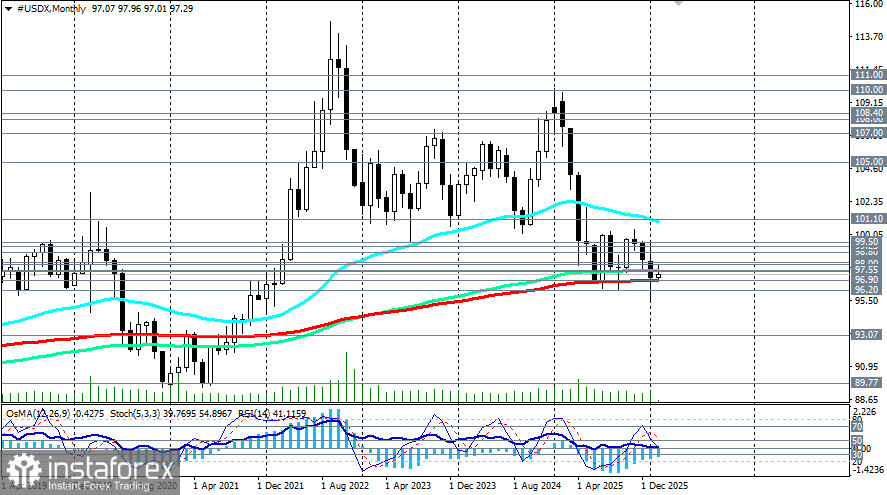
The US dollar index is at a turning point. Short-term monetary expectations have converged with long-term structural shifts and been exacerbated by unprecedented political risk. The technical picture fully confirms the fundamental concerns.
The priority scenario for the coming weeks is further dollar weakness. A break below 96.90 would be a powerful signal of an intensified multi-month downtrend. Investors and traders should view rebounds as opportunities to increase short positions, and treat any dollar-positive prints in the context of whether they can change the broader negative macro-political narrative. Trust in the dollar as a "trouble-free" asset has been undermined. Restoring it will require not only strong economic data but also a clear re-establishment of US monetary policy independence and predictability.


