
See also


 24.06.2026 06:00 AM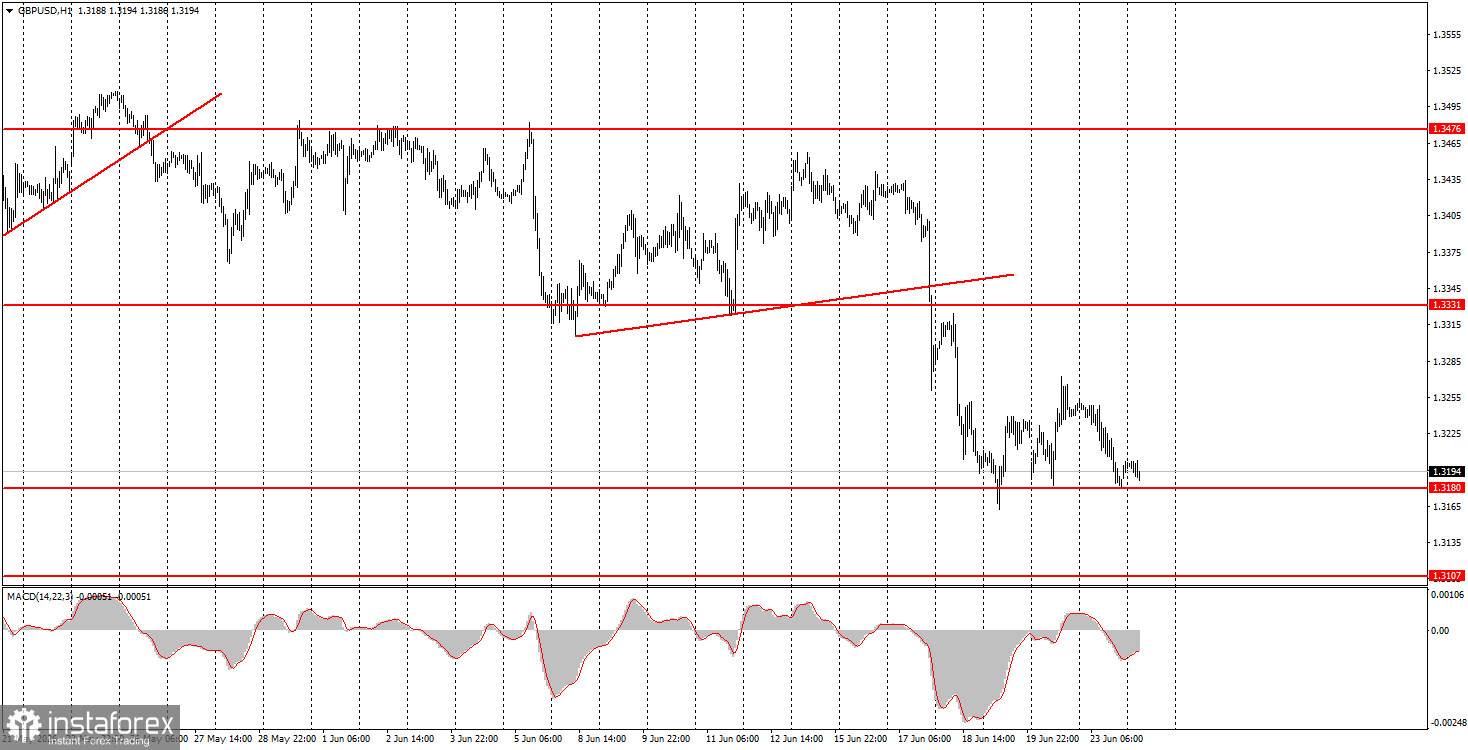
The GBP/USD pair traded lower again on Tuesday. In the UK, business activity indices for the services and manufacturing sectors were published yesterday and left much to be desired. Theoretically, these indices could have contributed to the decline of the British currency, but we believe these two factors are unrelated. The GBP/USD pair began its decline last week when the Federal Reserve meeting took place, and the U.S. central bank took a slightly more "hawkish" stance than markets expected. The market paid no attention to the Bank of England's meeting, nor to the positive reports from Great Britain. Therefore, we are currently observing an inertial downward movement. The market is selling because the pair is declining, and the pair is declining because the market is constantly selling. So far, traders have not been able to overcome the 1.3180 level, so there is hope that this collapse of the British currency will end here. However, the euro continues to decline and may pull the pound further down.
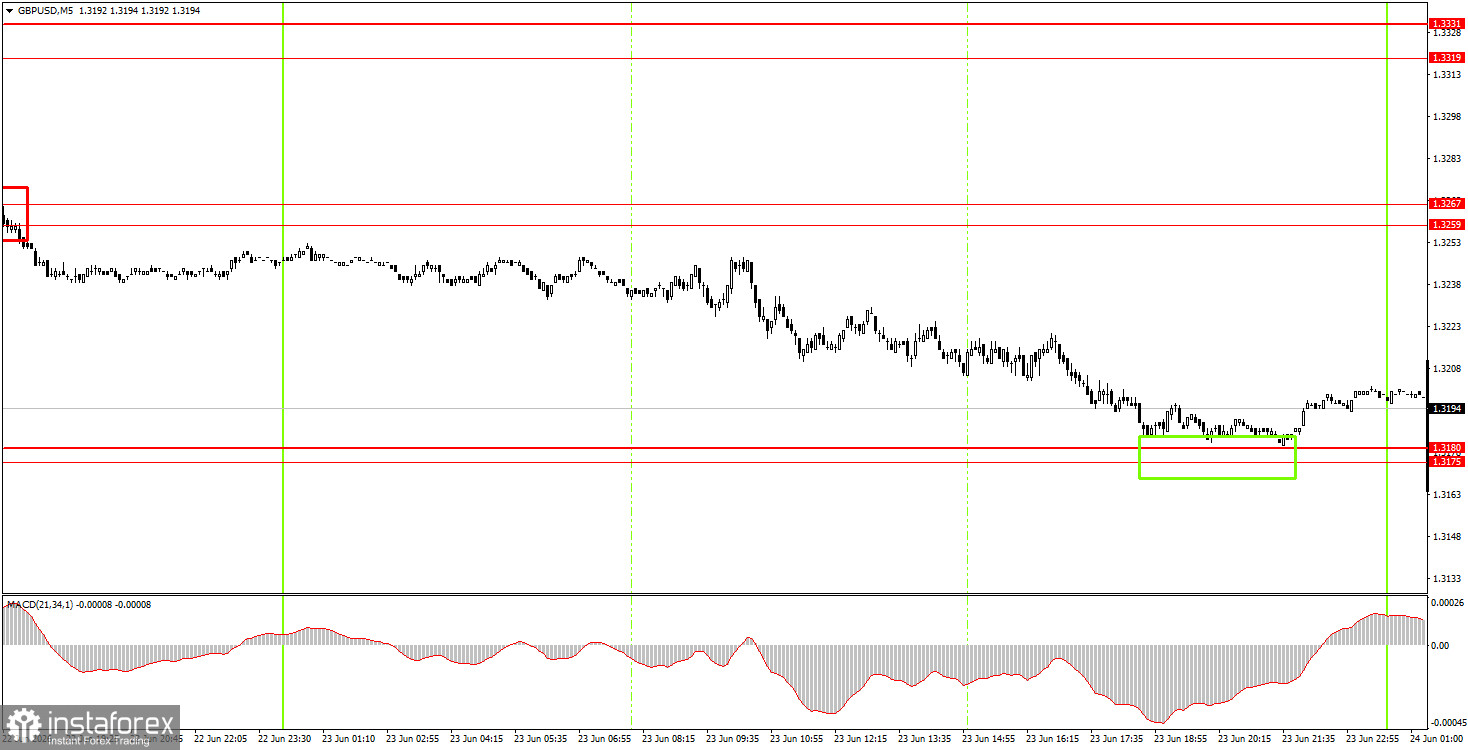
On the 5-minute timeframe on Tuesday, the first trading signal was generated at the end of the day. However, the previous signal, in the form of a rebound from the area of 1.3259-1.3267, formed on Monday evening and allowed traders to capture almost the entire downward movement of the pair to the area of 1.3175-1.3180. The price bounce from the 1.3175-1.3180 area allowed traders to open long positions, which remain relevant today.
On the hourly timeframe, the GBP/USD pair has left the sideways channel, but we doubt that the decline will continue for long. Of course, if serious reasons for a new strengthening of the dollar appear, this scenario is possible. However, at the moment, we do not see any such reasons. The conflict in the Middle East, if not completely resolved, is on hold; the Fed has only declared a possible rate hike by the end of the year, and the political crisis in the UK is a common phenomenon.
On Wednesday, novice traders can open new short positions with targets of 1.3096-1.3107 if the price stabilizes below the 1.3175-1.3180 area. The price rebound from the area of 1.3175-1.3180 will allow opening long positions with targets of 1.3259-1.3267.
On the 5-minute timeframe, trading can currently be done at the levels of 1.3175-1.3180, 1.3259-1.3267, 1.3319-1.3331, 1.3380-1.3386, 1.3456-1.3476, 1.3587-1.3598, 1.3631-1.3641, 1.3695, and 1.3741-1.3751. On Wednesday, there are no important data releases planned in the UK, and only one secondary report will be released in the U.S. However, the market is currently biased towards buying dollars and generally does not need reasons for those purchases.
Price levels (areas) of support and resistance are targets when opening long or short positions or sources of signals.
Red lines indicate channels or trend lines that display the current trend and indicate the preferred direction for trading.
The MACD indicator (14,22,3) – histogram and signal line – is a supplementary indicator that can also be used as a source of signals.
Important speeches and reports (contained in the news calendar) can significantly impact the movement of the currency pair. Therefore, during their release, trading should be conducted with maximum caution, or one should exit the market to avoid sharp reversals against preceding movements.
Beginners trading in the forex market should remember that not every trade can be profitable. Developing a clear strategy and practicing money management are key to long-term success in trading.


