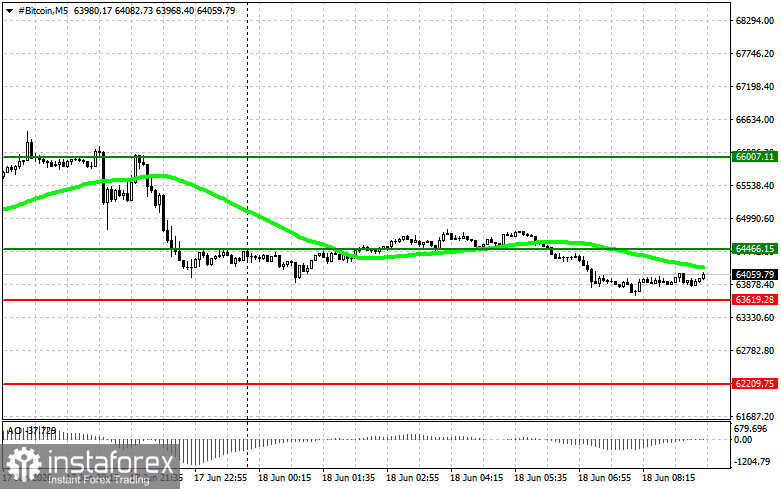
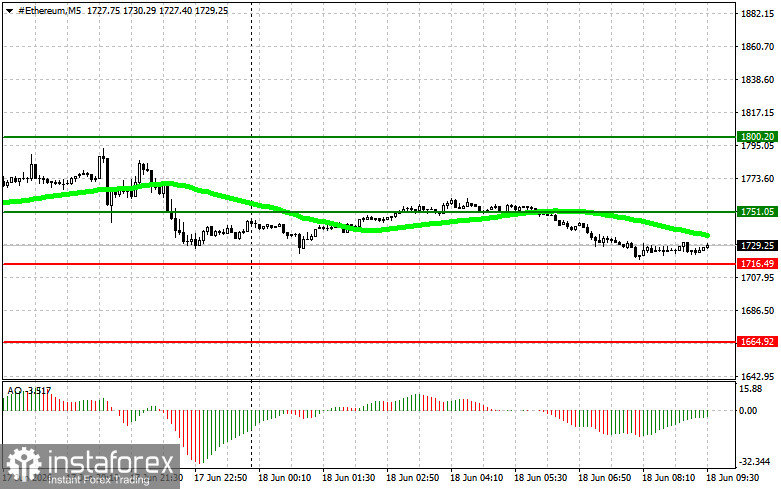
Bitcoin is trading below $64,000, while Ethereum is around $1,730 after yesterday's FOMC meeting, during which interest rates were left unchanged.
The first FOMC meeting under Kevin Warsh concluded predictably in form but alarmingly in content. The rate was kept unchanged; however, the published economic forecasts were more hawkish than the market had anticipated. Against this backdrop, Bitcoin fell by about 2.2% to $64,150, while Ethereum lost 3.6%. XRP and Solana both dropped by 3%, and HYPE retreated by 1.5% to $72.
Notably, traditional safe-haven assets also declined alongside cryptocurrencies: gold lost 2.2%, and silver fell even more sharply, around 4%. This indicates that the market response has a broad macroeconomic character rather than being a specific crypto problem.
The Federal Reserve's hawkish forecast essentially confirmed what we discussed yesterday: there are virtually no arguments left for easing policy. The May CPI at 4.2%—the highest since April 2023—along with a robust labor market and an energy shock from the Middle Eastern conflict, leaves Warsh with minimal room for dovish signals. Most committee members do not anticipate a rate cut until the end of 2026, while some allow for an increase. For the crypto market, this means the continuation of a tight monetary environment: cheap money, which historically fueled previous crypto cycles, will not enter the system at least until the end of the year. This structural factor, rather than short-term volatility, poses the main threat to recovery.
As for short-term trading, the strategy and conditions are outlined below.
Bitcoin
Buy Scenario
Scenario #1: I plan to buy Bitcoin today at an entry point around $64,400, with a growth target of $66,000. At around $66,000, I will exit my buy positions and sell immediately on the rebound. Before buying on the breakout, ensure that the 50-day moving average is below the current price and that the Awesome indicator is above zero.
Scenario #2: I can buy Bitcoin at the lower boundary of $63,600 if there is no market reaction to its breakout back to $64,400 and $66,000.
Sell Scenario
Scenario #1: I plan to sell Bitcoin today at an entry point around $63,600, with a target of a decline to $62,200. At around $62,200, I will exit my sell positions and buy immediately on the rebound. Before selling on the breakout, ensure that the 50-day moving average is above the current price and that the Awesome indicator is below zero.
Scenario #2: I can sell Bitcoin at the upper boundary of $64,400 if there is no market reaction to its breakout back to $63,600 and $62,200.
Ethereum
Buy Scenario
Scenario #1: I plan to buy Ethereum today at an entry point around $1,751, with a growth target of $1,800. At around $1,800, I will exit my buy positions and sell immediately on the rebound. Before buying on the breakout, ensure that the 50-day moving average is below the current price and that the Awesome indicator is above zero.
Scenario #2: I can buy Ethereum at the lower boundary of $1,716 if there is no market reaction to its breakout back to $1,751 and $1,800.
Sell Scenario
Scenario #1: I plan to sell Ethereum today at an entry point around $1,716, with a target of $1,664. At around $1,664, I will exit my sell positions and buy immediately on the rebound. Before selling on the breakout, ensure that the 50-day moving average is above the current price and that the Awesome indicator is below zero.
Scenario #2: I can sell Ethereum at the upper boundary of $1,751 if there is no market reaction to its breakout back to $1,716 and $1,664.
You have already liked this post today
* Analisis pasaran yang disiarkan di sini adalah bertujuan untuk meningkatkan kesedaran anda, tetapi tidak untuk memberi arahan untuk membuat perdagangan.



 18.06.2026 09:31 AM