
Vea también


 21.04.2026 12:50 AM
The phrase "what was to be expected" is practically on the tip of my tongue. This morning, it became known that Iran has canceled the scheduled second round of negotiations. The formal reason was the continued American blockade of the Strait of Hormuz and the seizure of an Iranian trading vessel. Tehran reported that the US maritime blockade was supposed to be lifted in response to similar actions from Iran, but that did not happen. Therefore, Iran is extending its blockade, and negotiations with Washington are canceled.
To be frank, I thought the negotiations would still take place, but they should have occurred on Saturday or Sunday, as Donald Trump mentioned. However, the parties did not manage to meet over the weekend, which immediately raises concerns about a complete lack of agreement on a date for the talks. It feels like Tehran and Washington are calling each other daily and exchanging phrases like, "Are we meeting today? No? Okay, see you tomorrow."
However, the fact remains: the second round of negotiations can now also be considered a failure, and the situation in the Middle East has escalated again in recent days. The fact is that Trump promised on Sunday to devastate all of Iran's power plants if the agreement is not signed soon. Something tells me that an agreement will not be reached anytime soon. And on Wednesday, the two-week ceasefire between Iran and the US officially expires. The deal could not be agreed upon, nor could the ceasefire be extended. Therefore, by Wednesday, the war in the Middle East may resume, and Trump may have to delay the tenth tick mark on his "list of completed wars."
Is there any point in expecting a new round of negotiations soon? In my opinion, even if it happens, the result will be exactly the same as if it did not. Iran continues to insist on its right to possess nuclear weapons and conduct nuclear research. Washington issues the opposing ultimatum. Therefore, even if I disregard all other points of the agreement, I do not see how the parties can reach an understanding on the main issue. Consequently, the probability of an agreement and long-term peace in the Middle East is reduced to minimal values, if not zero. Middle Eastern oil companies are set to look for new oil and gas fields, particularly in Africa, without expecting a quick end to the conflict.
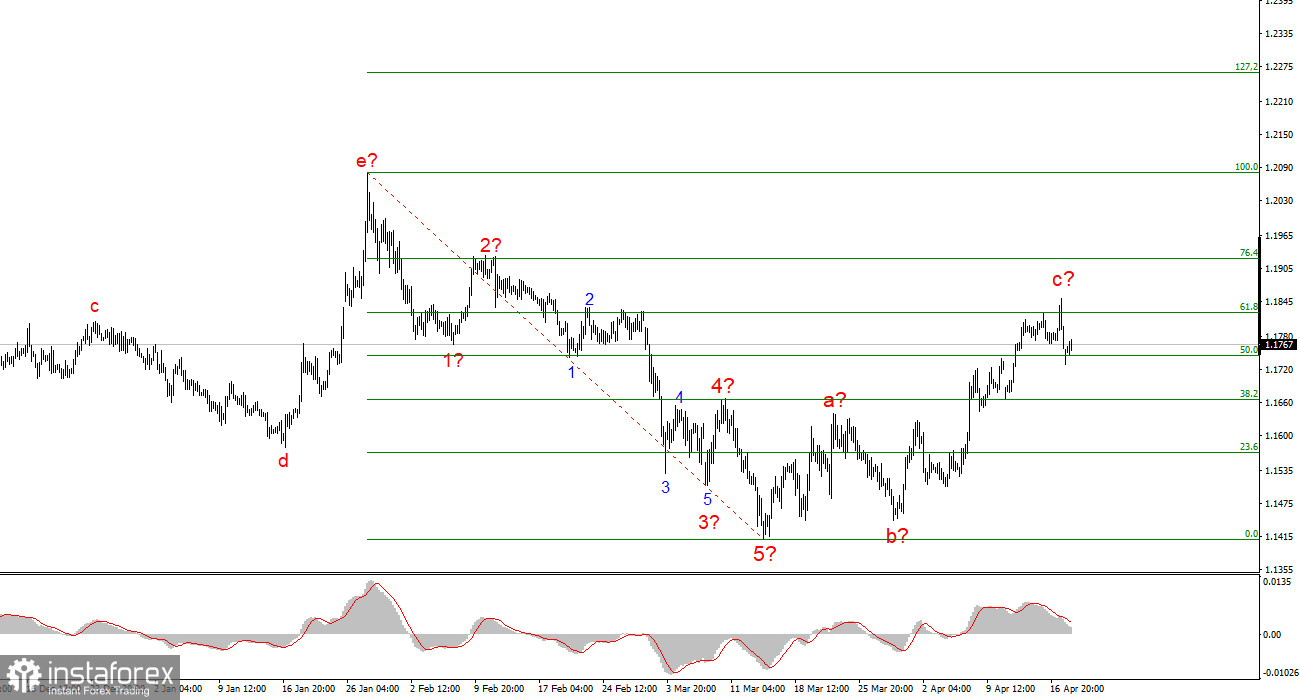
Based on the analysis of EUR/USD, I conclude that the instrument remains in the bullish segment of the trend (as shown in the lower image) and, in the short term, is in a corrective structure. The corrective wave set appears to be quite complete and may take on a more complex, elongated form only if a stable and long-term ceasefire is established between Iran, the US, Israel, and ALL other countries in the Middle East. Otherwise, I believe that from current positions, a new bearish wave set may begin to form. Or at least a corrective wave.
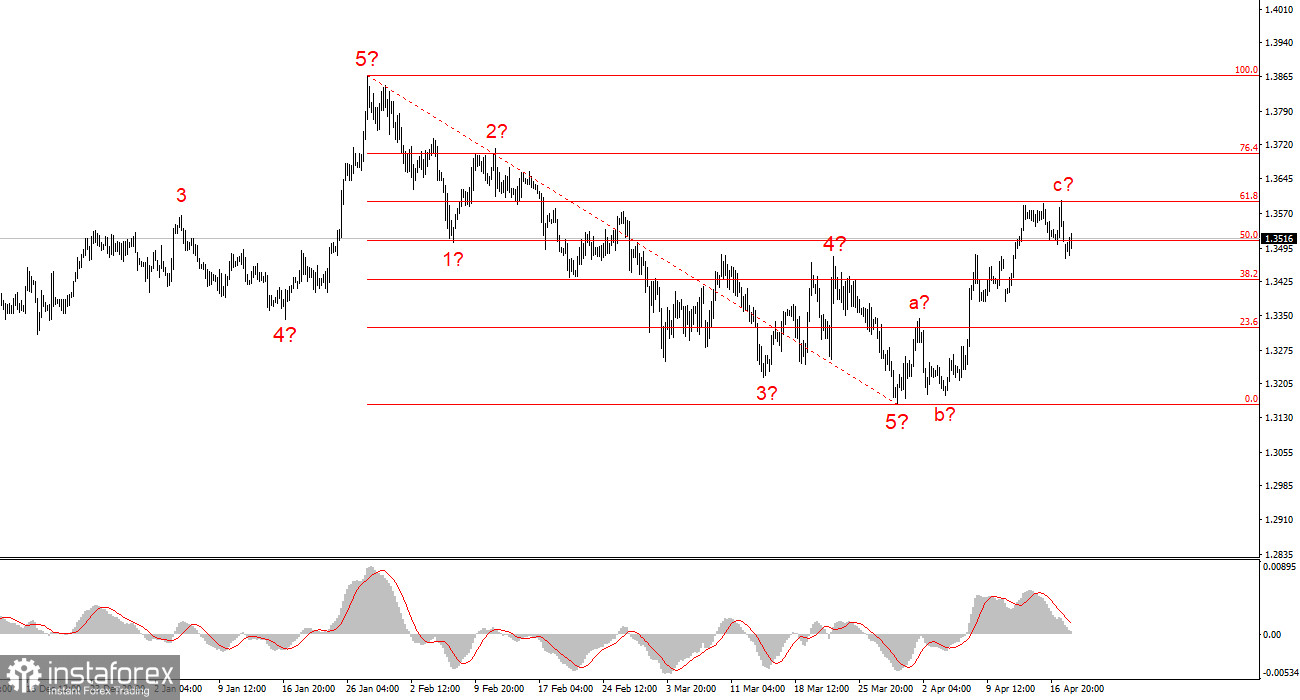
The wave picture for the GBP/USD instrument has become clearer over time, as I expected. We now see a clear three-wave upward structure on the charts, which may already be completed. If this is indeed the case, we should expect at least one descending wave (presumably wave d) to form. The upward segment of the trend may take a five-wave form, but for this to happen, the conflict in the Middle East needs to cool down rather than reignite. Therefore, the base scenario for the coming days is a decline into the area of the 34th figure or slightly below. After that, everything will depend again on geopolitical factors.


