
See also


 23.06.2026 09:21 AM
The old rule that swapping components does not change the sum no longer applies to US equities. The S&P 500 closed in the red, while the Dow Jones rose, and the Russell 2000 outperformed the Nasdaq by 2.2 percentage points, marking the widest gap in a year. Investors are reassessing their list of favorites, rotating out of pricey technology names into small-cap stocks.
Is it a paradox? Not really. The S&P 500 has rallied almost 20% from its wartime lows on expectations of a durable de-escalation in the Middle East, sustained interest in AI-related technology trades, solid corporate earnings, and the resilience of the US economy. Goldman Sachs has cut the odds of a US recession to 15% from 25%, citing lower energy prices and an improving labor market. Curiously, that estimate is now below pre-conflict levels of 20%. The implication is that the conflict scared markets more than its de-escalation has calmed them.
However, the higher the S&P 500 climbs, the more nervous investors become. Mixed headlines from the Middle East, worries about underperforming tech companies, and concern about further Fed tightening are keeping buyers on the sidelines.
Probability dynamics for three Fed rate hikes
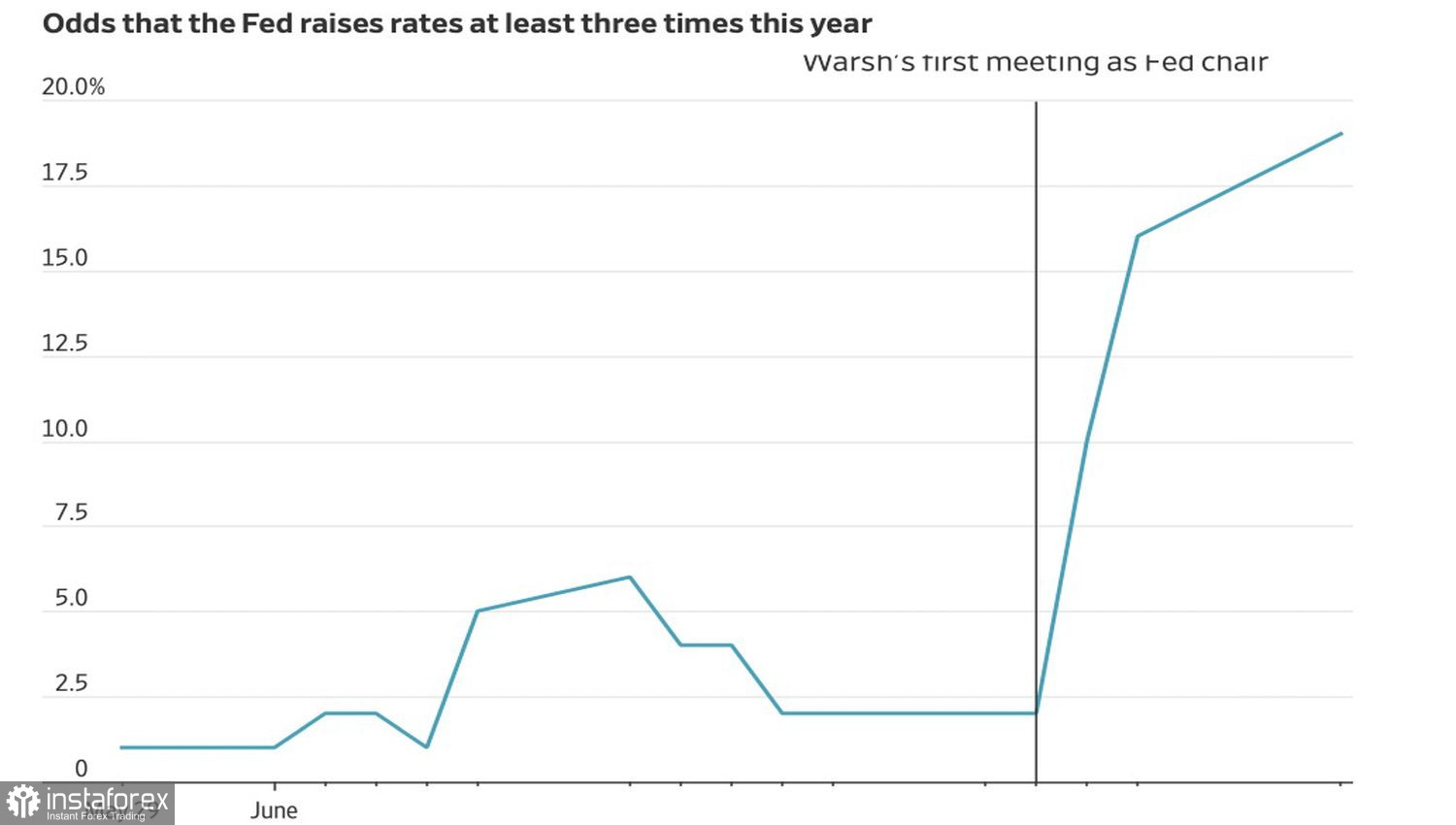
The US granted Iran a 60-day license to sell oil in the international market for US dollars, providing Tehran with an economic lifeline. That development pushed oil prices lower again and reduced the odds of further Fed tightening. Still, Bank of America expects three federal funds rate hikes this year, citing strong macro data and a hawkish shift in central bank communication.
Investors are also increasingly anxious about the durability of the AI-related stock rally. Markets worry that hyperscalers are getting extremely low returns on their massive AI investments.
The S&P 500 was also pressured by a sell-off in SpaceX. Shares of Elon Musk's company fell for a third straight session and are down about 23% from the June high. The firm issued bonds for the first time in its history, using proceeds to pay down debt. Despite the sell-off, the paper still trades above the IPO price.
So, while the S&P 500 celebrates de-escalation in the Middle East, it now fears two other fronts — overhyped AI and a bolder Fed. If both fears prove unfounded, the rally should continue. If even one materializes, the Russell 2000's rotation may turn out to be only a breather before a more significant correction.
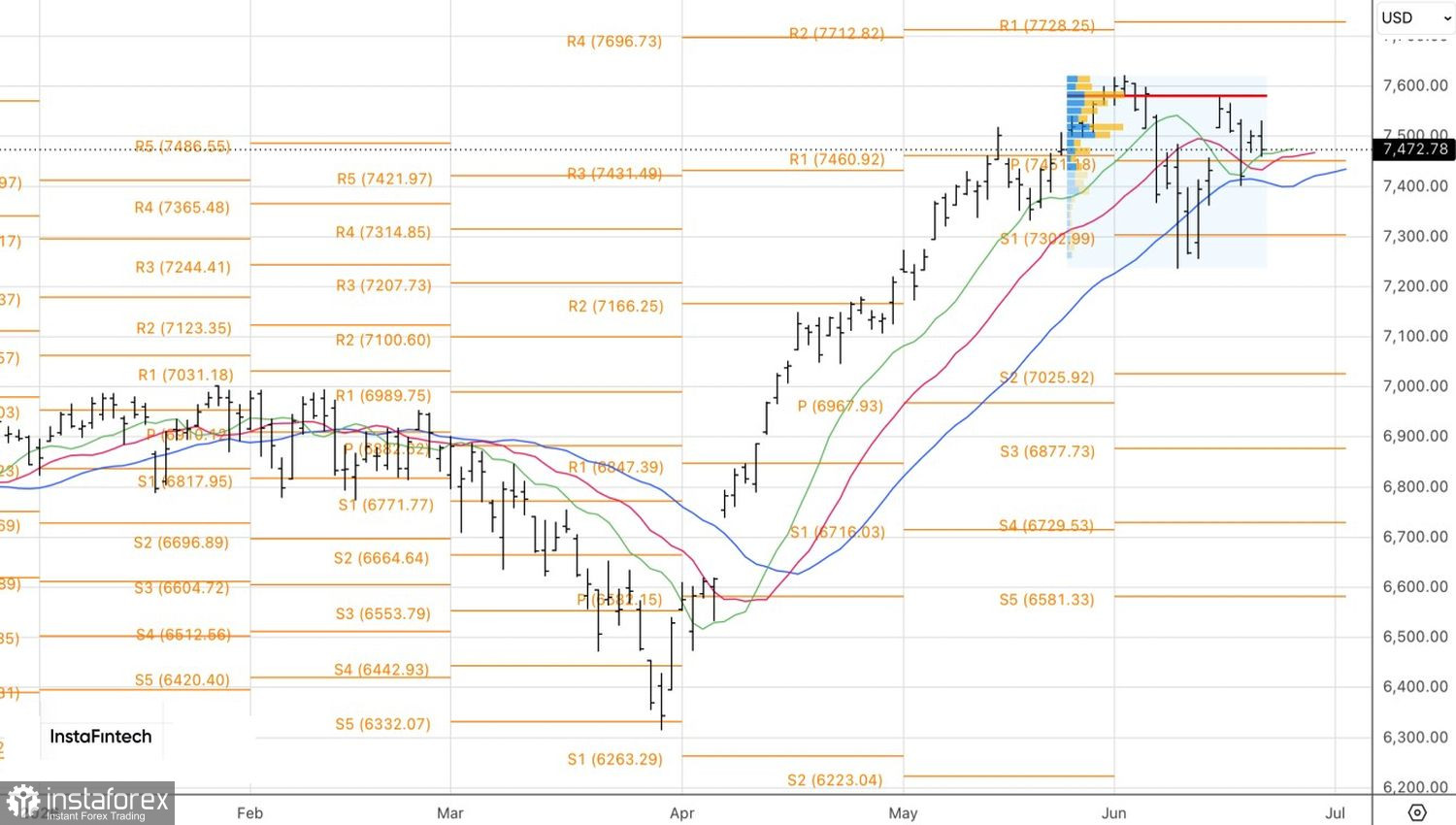
Technically, the daily chart for the S&P 500 shows a bearish engulfing bar: its body completely covers the previous inside bar, signaling bear strength. A break of the 7,450 support level would raise the risk of a pullback and provide a basis for selling — though one should not get carried away. In the context of an uptrend, bounces off the support levels of 7,420, 7,315, and 7,300 would be opportunities to return to long positions.


