
Lihat juga


 02.09.2026 05:29 AM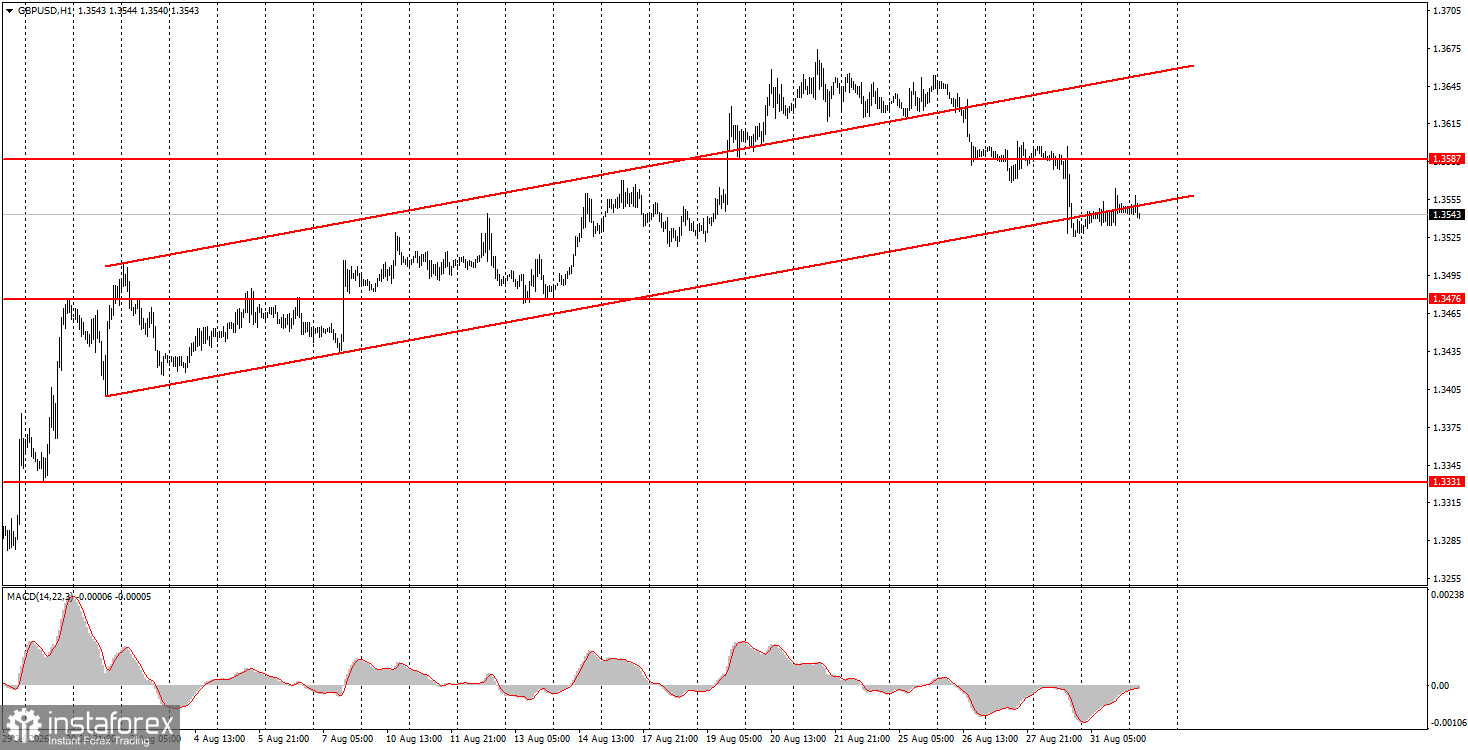
The GBP/USD pair resumed its downward movement on Tuesday, a move that is completely justified from a technical standpoint. Recall that at the end of last week, the British pound broke out of the ascending channel through the lower boundary. Thus, a new downward trend has begun. As for the fundamental and macroeconomic justifications for this movement, we do not see any. Yesterday, two reports were released in the U.S., neither of which could support the dollar. The ISM manufacturing index came in below forecasts, and the JOLTS report on job openings also fell short of expectations. Yet, the dollar strengthened.
Geopolitical tensions are starting to worsen again, which may theoretically support the U.S. dollar. Iran and the U.S. exchanged strikes, and Tehran officially announced the beginning of a military operation against the U.S. and its allies in the region. The specifics of this operation remain unclear, but it is clearly a new escalation of the conflict. Prices for oil, gas, and fuel have already surged.
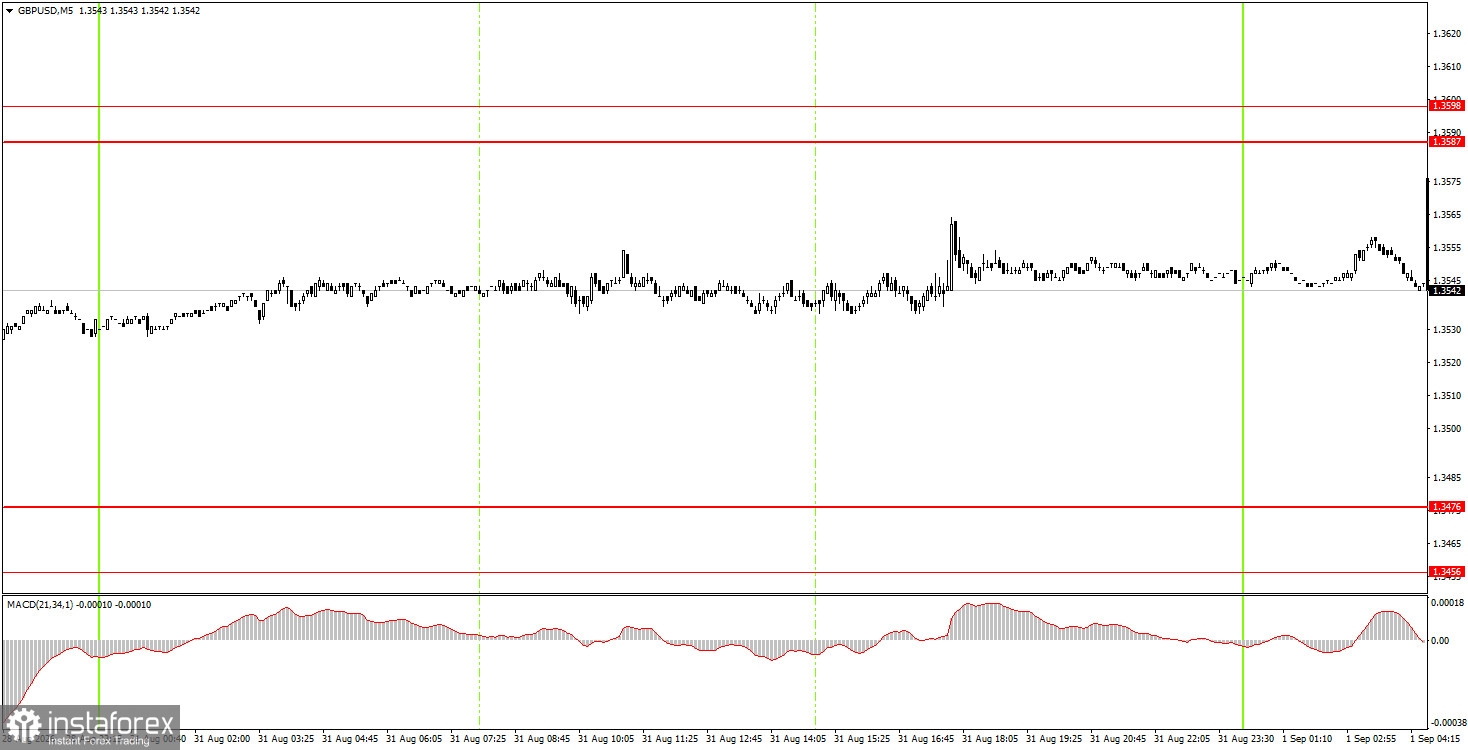
In the 5-minute timeframe, no trading signals were formed on Tuesday, as the pair did not engage with any levels or areas throughout the day. However, formally, traders can still maintain the short positions opened on Friday.
On the hourly timeframe, the GBP/USD pair began a downward corrective trend. In our opinion, the British pound should continue to rise in the medium term, but for now, it is in correction. The movement from the lower boundary of the sideways channel to the upper boundary continues on the weekly timeframe, and it is not yet complete. Friday's improved sentiment for the American currency is unlikely to last long for the dollar.
On Wednesday, novice traders may consider holding short positions with a target of 1.3456-1.3476, following Friday's signal. Long positions can be opened if the price rebounds from the 1.3456-1.3476 area, targeting 1.3587-1.3598.
On the 5-minute timeframe, the following levels should be considered: 1.3259-1.3267, 1.3319-1.3331, 1.3380-1.3386, 1.3456-1.3476, 1.3587-1.3598, 1.3631-1.3641, 1.3695, 1.3741. On Wednesday, no important events are scheduled in the UK, while the U.S. will release only the ADP labor market report, which is considered secondary. Thus, volatility may remain quite low today.
Price levels (areas) of support and resistance are levels that serve as targets when opening buy or sell trades, or as sources of signals.
Red lines indicate channels or trend lines that illustrate the current trend and show the preferred direction for trading.
The MACD indicator (14,22,3) — the histogram and signal line — is an auxiliary indicator that can also be used as a source of signals.
Important speeches and reports (contained in the news calendar) can significantly influence the movement of currency pairs. Therefore, during their release, trading should be approached with utmost caution, or traders should exit the market to avoid sudden reversals against the preceding movement.
Beginner forex traders should remember that not every trade can be profitable. Developing a clear strategy and practicing money management are key to long-term success in trading.


