
Veja também


 11.02.2026 12:32 AM
For over a week, market participants have been discussing the US labor market and its prospects. It all began last Monday, as the first week of the month is when the Nonfarm Payrolls and unemployment reports are released, which largely determine the fate of the Federal Reserve's monetary policy. However, in the near future, the direction of interest rates will not be dictated by the labor market, inflation, or the FOMC committee. It will be determined by Donald Trump.
As I mentioned, Trump will appoint a Fed chair who will unquestioningly follow the White House's directives. Therefore, it was perplexing to me that the dollar strengthened after it became known that Kevin Warsh would be the new chair. Recall that in the past, Warsh held a "hawkish" view of the Fed's monetary policy. But those days are gone. Before Warsh could officially become the sole candidate for the vacant position after Jerome Powell's departure, he announced that he would adopt a more "dovish" stance.
Trump himself has made another statement. The US president said he expects Warsh to lower interest rates, otherwise he will sue him. This is one of those instances where there's no jest in the jest. If you don't believe it, look at Trump's current relationship with Powell. If Warsh follows in Powell's footsteps, he will quickly find himself in court, as it will soon become clear that he was also involved in the misuse of budget funds during the Fed's building renovations. It doesn't matter that Warsh had no relation to the Fed at that time; there will always be a reason, one way or another.
Therefore, I continue to believe that Warsh will adhere to a "dovish" policy and is expected by Trump to exert influence on the FOMC from within. He will push for a vote in favor of lowering interest rates. Along with Warsh, four Fed governors are ready to vote for a rate cut. The only remaining problem is securing two more votes. Trump will now work with Warsh to resolve this issue.
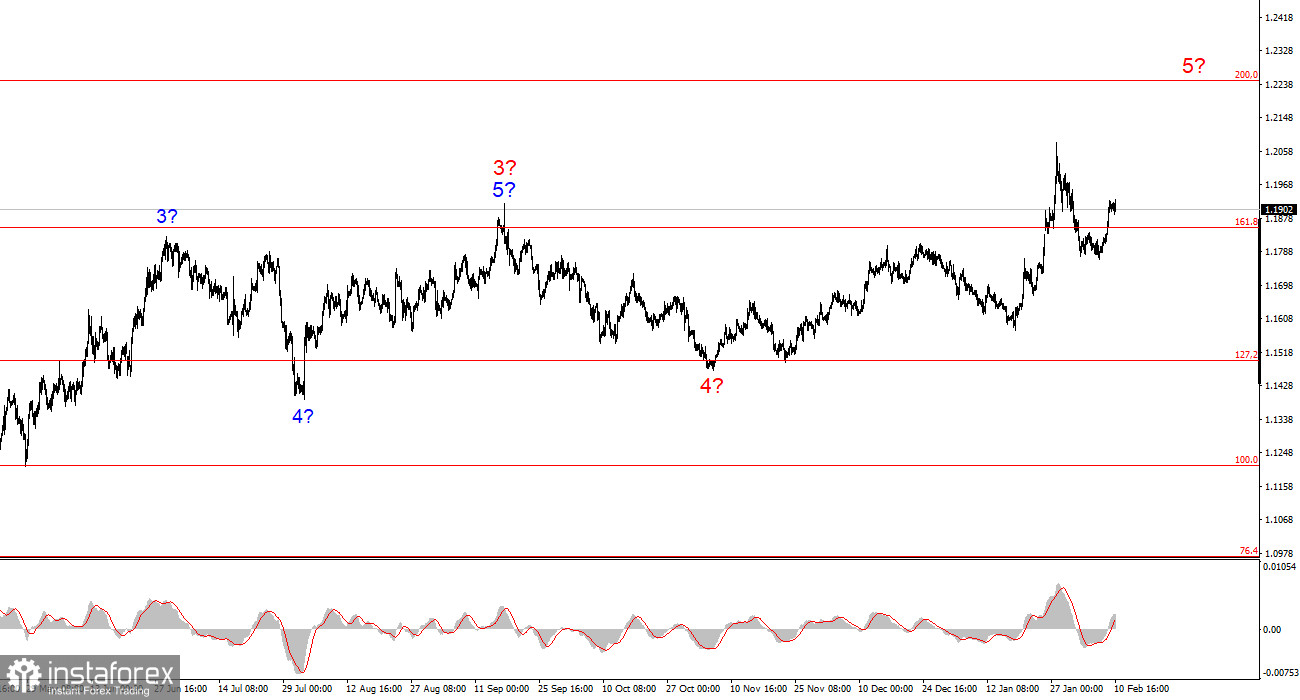
Based on the analysis of EUR/USD, the instrument continues to build an upward trend segment. The policies of Trump and the Fed's monetary policy remain significant factors in the long-term decline of the American currency. The targets for the current trend segment could reach the 25 figure. At present, I believe that the instrument remains within the framework of global wave 5, so I expect price increases in the first half of 2026. However, in the near term, I anticipate a downward wave (or series of waves), as the structure a-b-c-d-e also appears complete. In the near future, my readers can look for areas and levels for new long positions with targets located around 1.2195 and 1.2367, which correspond to 161.8% and 200.0% Fibonacci.
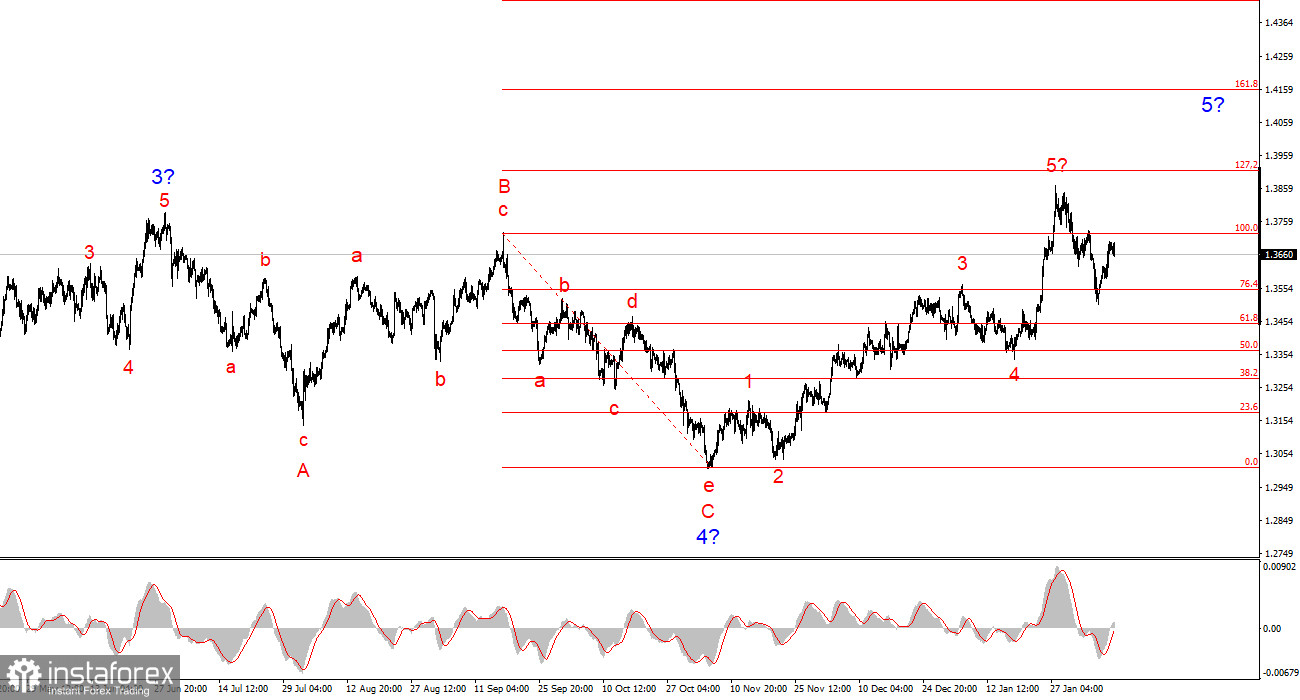
The wave pattern for the GBP/USD instrument is quite clear. The five-wave upward structure has completed its formation, but the global wave 5 may take on a much more extended appearance. I believe that in the near future, we may observe the construction of a corrective wave set, after which the upward trend will resume. Consequently, in the coming weeks, I recommend looking for opportunities for new longs. In my opinion, under Trump, the British pound has every chance of reaching 1.45-1.50$. Trump himself welcomes a decline in the dollar's exchange rate. All his actions have a dual effect: the decline of the dollar and the resolution of domestic, external, trade, and geopolitical issues.


