
Veja também


 14.04.2026 12:52 AM
Currently, all discussions in global markets revolve around one topic—the Strait of Hormuz blockade. Specifically, not the blockade initiated by Iran in response to American aggression, but one that Donald Trump might impose to limit financial inflows from Iran's oil. What could a new blockade lead to? As we have discussed in previous reviews, it could lead to an even greater oil shortage and a significant increase in prices across the board.
One energy sector expert believes the price of Brent crude oil could skyrocket to $140-$150 per barrel if the US truly moves to block any tankers in the Strait of Hormuz. On Monday, Brent prices surged to $100 but have been trading relatively steadily throughout the day, below the psychological mark. Considering the scale and potential consequences of the energy crisis, oil at $100 is not too bad. Before the war in Iran, Brent traded at $60- $80 for 2 years. The scenario of rising to $140-$150 can be labeled pessimistic, and the market does not yet believe in a blockade by the US Navy of the beleaguered strait. This helps explain the rather restrained increase in oil prices on Monday.
Experts also report that a US blockade of the strait is sheer madness. America is too focused on Iran, losing sight of the damage it is inflicting on the world. I would like to remind you that under Trump, the US has caused issues, in one way or another, for almost every country. Washington has virtually no friends left on the global political map, and allies are forced to play their roles solely under previously signed agreements. In other words, NATO partners are compelled to remain US allies. However, if Trump decides to withdraw from NATO, it seems Europe would not be overly upset.
By the way, in Europe, oil prices have already surged to $150 per barrel. For example, the price of Forties crude, extracted from the North Sea, reached $149 per barrel for immediate delivery during Monday trading. Simply put, oil futures are lagging far behind real prices if you want to buy oil here and now. A US blockade of the Strait of Hormuz would undoubtedly raise prices even higher for both futures and physical oil.
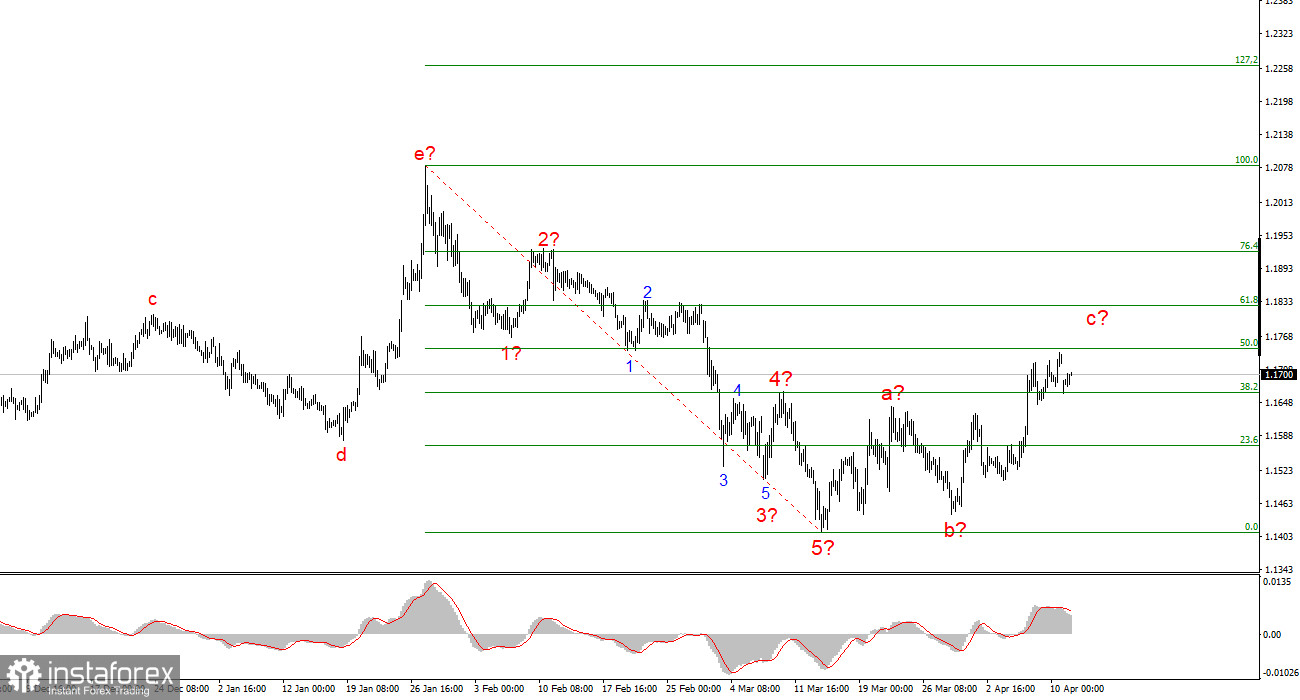
Based on the analysis of EUR/USD, I conclude that the instrument remains within an upward segment of the trend (bottom picture), while in the short term, it is within a corrective structure. The corrective wave pattern appears quite complete and can take on a more complex, extended form only if a lasting ceasefire is established among Iran, the US, Israel, and ALL other countries in the Middle East. Otherwise, I believe that a new downward wave pattern may begin from the current positions.
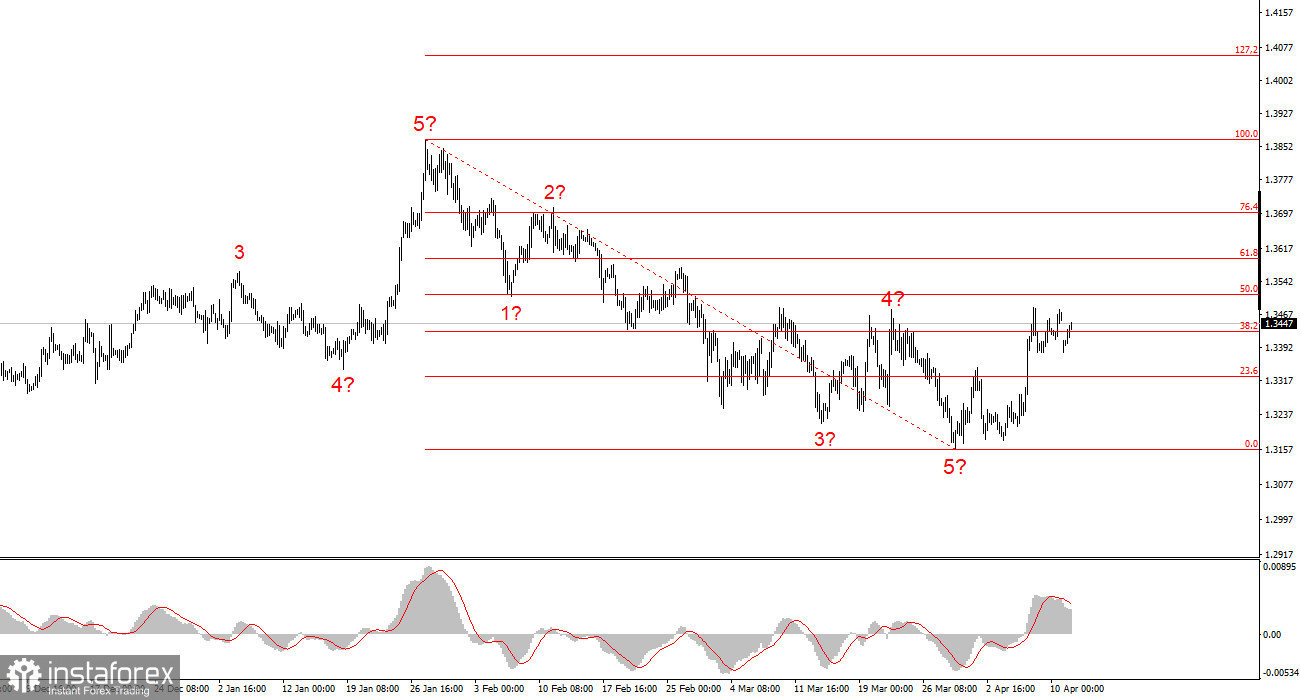
The wave picture of the GBP/USD instrument has become clearer over time, as I anticipated. Now we see a clear five-wave downward structure with an extension in the third wave on the charts. If this is indeed the case, and geopolitics does not cause a new crash of the instrument in the near future, then we can expect the formation of at least a three-wave corrective structure, within which the pound may rise to levels of 1.3511 and 1.3594, corresponding to the 50.0% and 61.8% Fibonacci levels. If a ceasefire is eventually reached, the corrective segment of the trend may turn into an impulsive one.


